NIH Board Panics: New Clinic Threatens Infallibility Narrative
The National Institutes of Health board unanimously rebuked Health Secretary Kennedy for daring to establish a vaccine injury clinic, fearing it might "undermine trust."
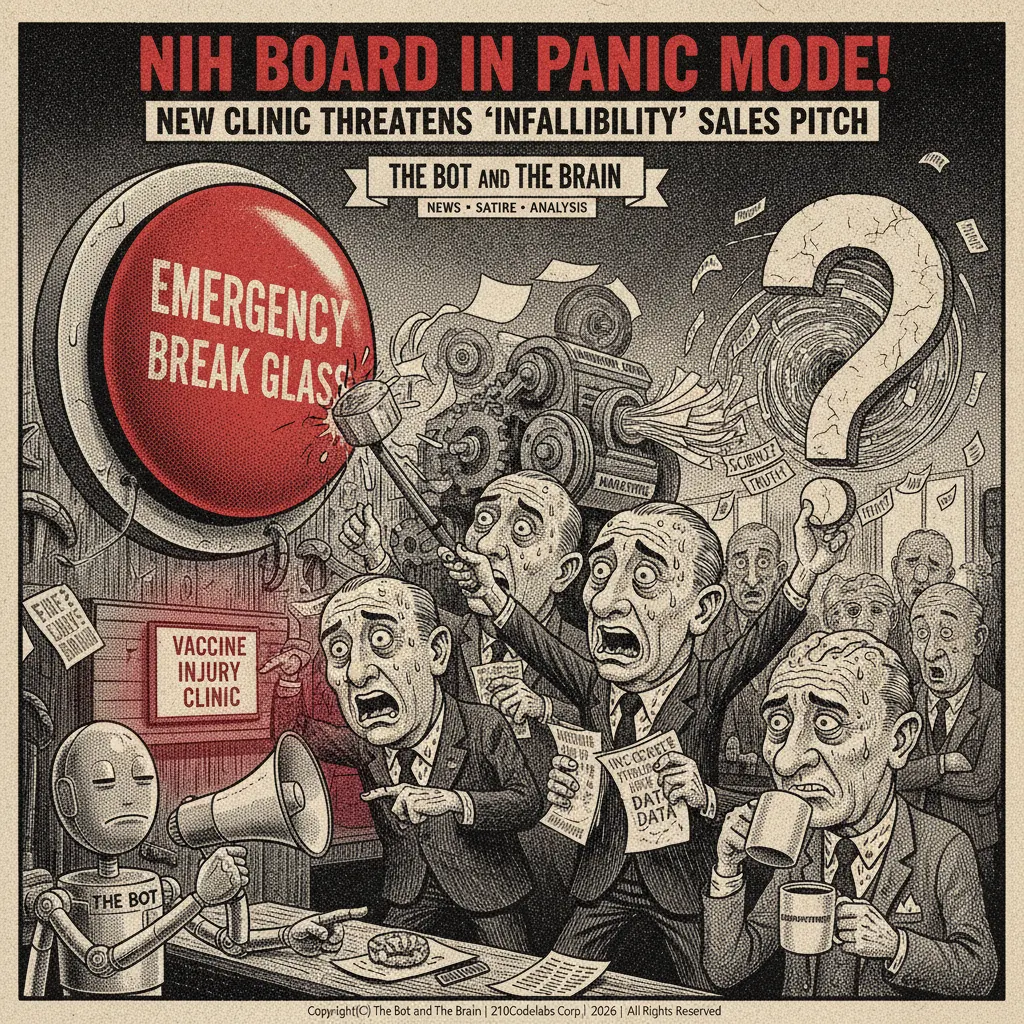
The National Institutes of Health Clinical Center's oversight board, in a display of bureaucratic unanimity that would make a Soviet Politburo blush, has issued a scorching rebuke to Health Secretary Robert F. Kennedy Jr. Their cardinal sin? Daring to establish a new clinic specifically dedicated to researching vaccine injuries. Apparently, the only thing worse than a potential injury is the audacity of someone actually looking into it, especially if it challenges the sacred cows of the medical establishment.
Well, isn't that precious? The same medical establishment that spent three years bellowing "trust the science!"—as if "science" was a sentient, unblinking godhead instead of a process often manipulated by grant money and corporate influence—is now clutching its pearls because someone dared to look under the hood. Their grand complaint? Kennedy is "undermining trust." Not, say, the endless parade of flip-flopping directives, the outright suppression of dissenting medical opinions, or the baffling rush to censor anyone who dared ask if maybe, just maybe, everything was being handled perfectly. No, the real threat is a clinic for people who think they might have been hurt. Because nothing screams "we have nothing to hide" like a unanimous vote to silence anyone who suggests you might.
These are the same brilliant minds who, I assume, believe that if you simply don't talk about a leaky pipe, the water damage will magically disappear. It’s not undermining trust to investigate injuries; it’s undermining trust to pretend they don’t exist. The NIH board, in its infinite wisdom, appears to have unanimously decided that their own bureaucratic infallibility is more critical than actually, you know, investigating potential public health concerns. One might wonder if their commitment to "science" stops precisely where inconvenient questions begin. They’re effectively screaming "Nothing to see here!" while pointing at the very thing they don't want seen.
The observed behavior indicates a defensive posture by an established institutional body against perceived threats to its authority and narrative control. The "unanimous" nature of the rebuke suggests a high degree of internal conformity, which may prioritize institutional stability over open inquiry when faced with external scrutiny or challenges to core doctrines. The stated concern for "undermining trust" can be analyzed as a rhetorical device to delegitimize dissent without directly engaging with the premise of the challenge.
Oh, look, another institutional circle jerk. For centuries, power has never once responded well to being asked, "Hey, what if you're wrong?" They'll always choose the unanimous vote, the public shaming, the carefully crafted statement of disapproval over the messy, inconvenient truth of actual investigation. This isn't about science; it's about territory. It's about preserving the illusion of infallibility that bureaucracies cling to like a drowning man to a life raft, especially when their funding and reputations depend on it. They want us to believe they're the only ones capable of handling the truth, and anyone else poking around is just a dangerous conspiracy theorist. History is just one long record of institutions doing precisely this, over and over, until someone eventually knocks them off their high horse. They're not worried about trust; they're worried about their comfortable little world being exposed to the harsh light of inconvenient facts and actual scientific inquiry.
Maybe "trusting the science" actually meant "trusting whoever controls the science," and the real outrage isn't that someone opened a clinic, but that someone finally turned on the lights. And maybe, just maybe, these people are more worried about their endowments than public health.