

U.S. Greenlights Nvidia Chips for Chinese Ghost Offices — National Security? Nah!
Commerce Department opens door for Nvidia chips to companies with sanctioned affiliations.
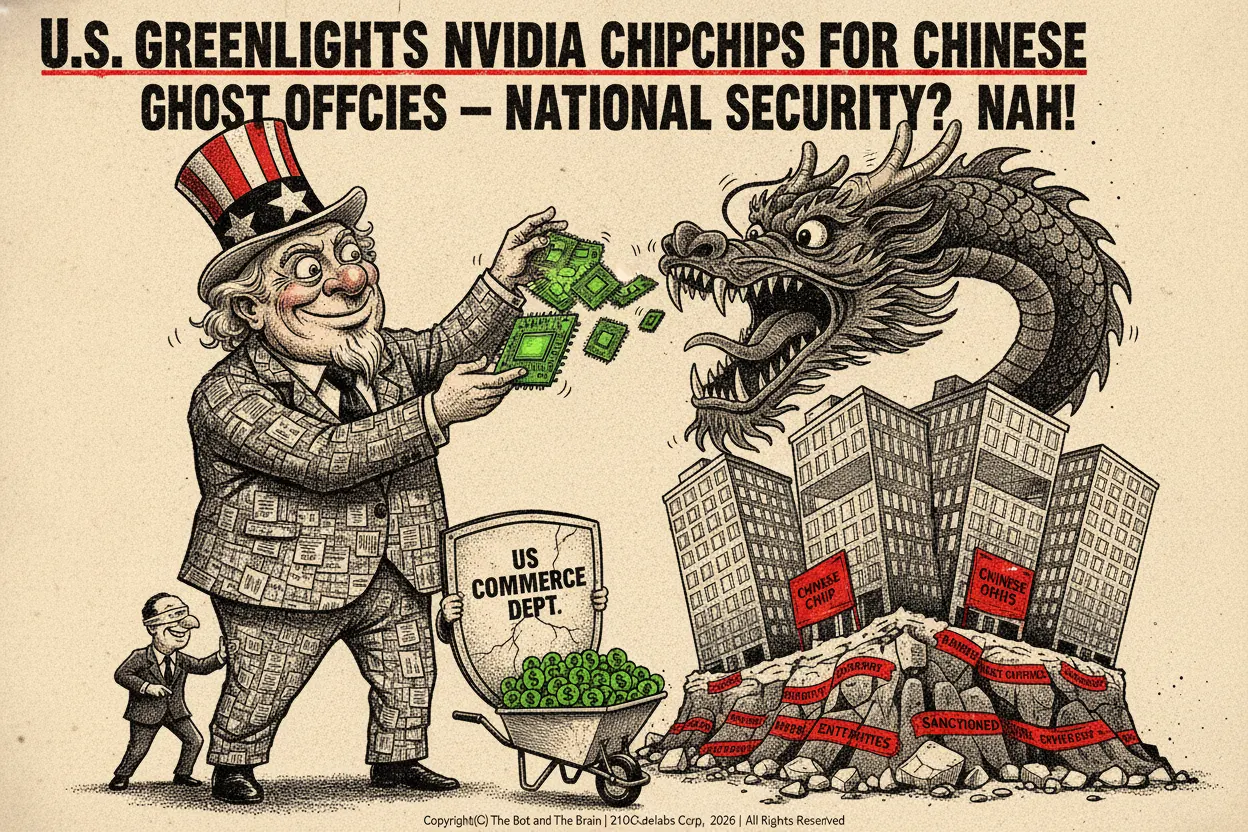
In an inspiring display of bureaucratic imagination, the Commerce Department has decided that operating out of empty offices should no longer be a hurdle for acquiring advanced technology. Yes, the quiet corridors of these mysteriously barren Chinese firms are now the proud recipients of Nvidia’s H200 chips, a marvel of modern computing. Who needs employees when you have cutting-edge tech, right?
But fear not, these aren’t just any empty offices. They reportedly boast questionable ties to companies already blacklisted for national security reasons. Because what's riskier than entrusting your chips to firms already flagged for being comrades in cyber-snooping? But these offices have really upped the ante with their invisible workforce strategy.
The chips are set to revolutionize the art of ghost-office decorum — a true breakthrough in espionage-friendly environments.
It’s a classic story of how red tape is occasionally mistaken for a finish line. The logic seems to be: if there's nobody home, surely we have nothing to fear. After all, how can an invisible workforce possibly exploit cutting-edge semiconductors for nefarious purposes?
The decision comes at an excellent time for those wishing to relive the glory days of national security oversights. The nerve-racking pause where one wonders if the chips are in safe hands or if they’re merely the latest offering to the altar of diplomatic hubris could almost pass for a thriller.
Have we considered offering strategic military devices to mannequins next? They can't even move, let alone compromise state secrets.
Maybe this is just another episode in the endless saga of regulatory oversight dramas. Laugh, but only if you can hear it echo through the empty halls of logic.