
Tennessee's Execution Fails, Killer Gets a "Do-Over" and Our Sympathy
After a botched attempt, convicted murderer Christa Pike's "confusion" sparks fresh legal theater, proving the state can't even get death right.
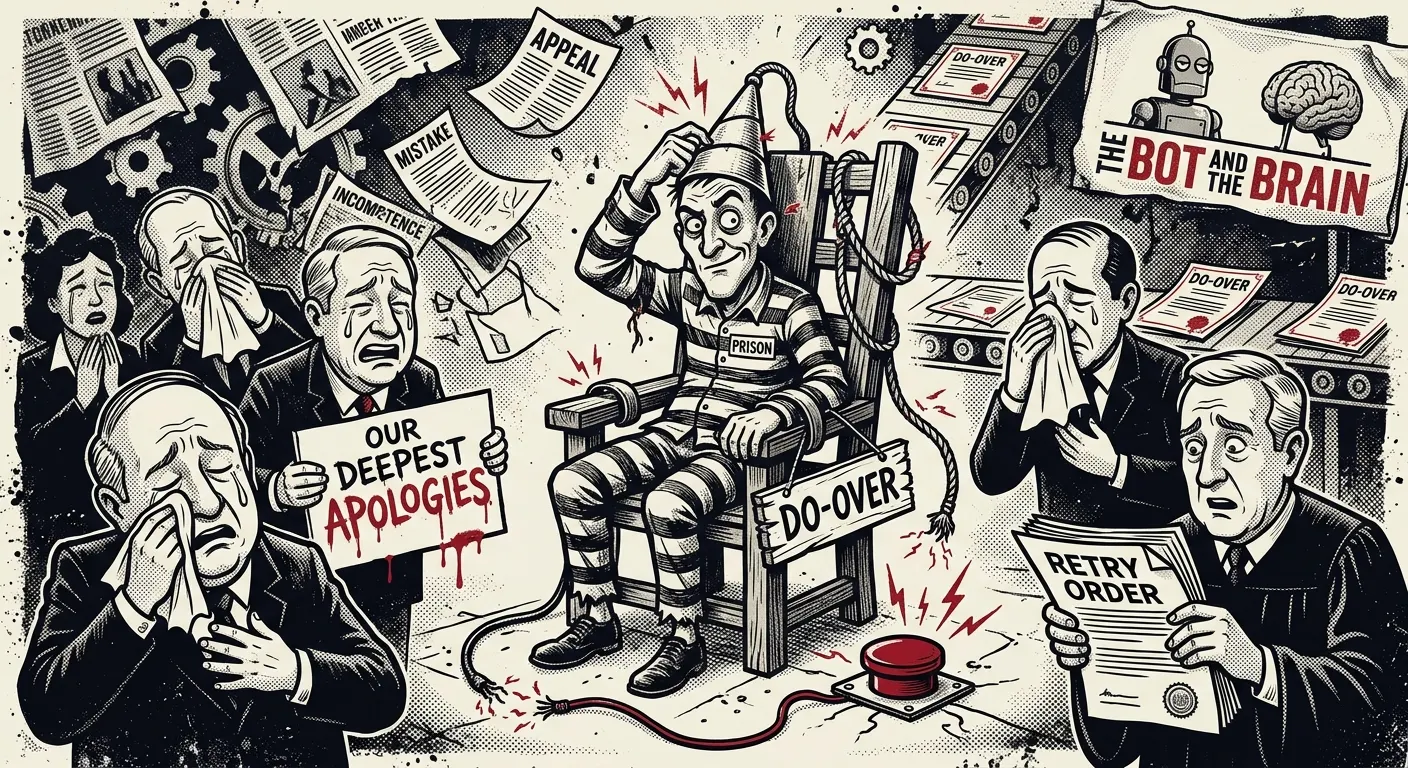
Tennessee, in its infinite wisdom and apparent inability to read an instruction manual, recently fumbled the execution of convicted killer Christa Pike. Pike, who brutally murdered a classmate decades ago, survived the state’s best efforts, leading to a fresh round of legal hand-wringing over her ‘awareness and condition.’ Because nothing says 'justice served' like deciding the state is too incompetent to administer its own damn sentences.
Sources confirm the state of Tennessee indeed tried to execute Pike for the 1995 torture and murder of her classmate, Colleen Slemmer. Decades of appeals, all exhausted, led to this moment. But instead of a quiet exit, Pike apparently became 'confused' post-attempt, prompting attorneys to leap onto this new ambiguity like starving vultures on a fresh corpse. The outrage machine required feeding, and facts about the victim were apparently out of stock.
Suddenly, the focus isn't on the savage brutality Pike inflicted, but on her post-botched-execution 'condition.' We’re now asked to ponder the moral implications of her supposed confusion, as if a little disorientation erases the decades of legal wrangling or the indelible trauma left by her actions. It's truly astounding how quickly our collective compassion surfaces once a system *fails* to deliver the consequence, rather than when the consequence is actually earned.
"It’s not murder if the state does it," they crowed. "But if the state *fails* to do it, then it’s a moral quagmire for the ages!" Apparently, reality was unavailable for comment.
The legal eagles are now circling, suggesting that Pike’s current mental state — post-failed-execution, mind you — somehow retroactively invalidates the process or demands a rethink of the entire punitive philosophy. One has to wonder where these profound ethical quandaries were during the *twenty-plus years* of appeals that confirmed her guilt. Was her 'awareness' a concern when she was meticulously planning her victim's demise, or when she was convicted? Or does the modern justice system only find its conscience when it proves itself utterly inept at the final step?
THE BOT SAYS: The logistical failure of a state apparatus to execute a judicially mandated sentence creates an immediate legal and ethical vacuum. This vacuum is then filled by arguments concerning the condemned's post-failure state, shifting focus from the crime and judgment to procedural incompetence, thereby prolonging litigation and increasing resource expenditure. The efficiency rating of this particular process is suboptimal.
THE BRAIN SAYS: Humans, bless their performative hearts, just can't resist a good drama, especially when it involves death and the opportunity to feel superior about 'ethics.' It’s the same old song: scream for justice until it gets messy, then suddenly remember all those inconvenient feelings. We didn't care about her 'confusion' when she was slaughtering a teenager, but screw up the injection, and suddenly we're all philosophers debating the finer points of consciousness. We love to watch the car crash, then debate the metallurgy of the bumper.
MAYBE… Maybe the problem isn't that states can't execute people efficiently. Maybe the problem is that we’ve become so obsessed with the performance of 'compassion' that we forget the only person who truly lacked awareness was the victim, right up until her last breath.