SCOTUS Grinds Gears on Privacy: Does Your Blockbuster Card Still Matter?
The Supreme Court grapples with a 1988 video privacy law, attempting to apply VCR-era logic to the untamed wilderness of modern streaming data and digital surveillance.
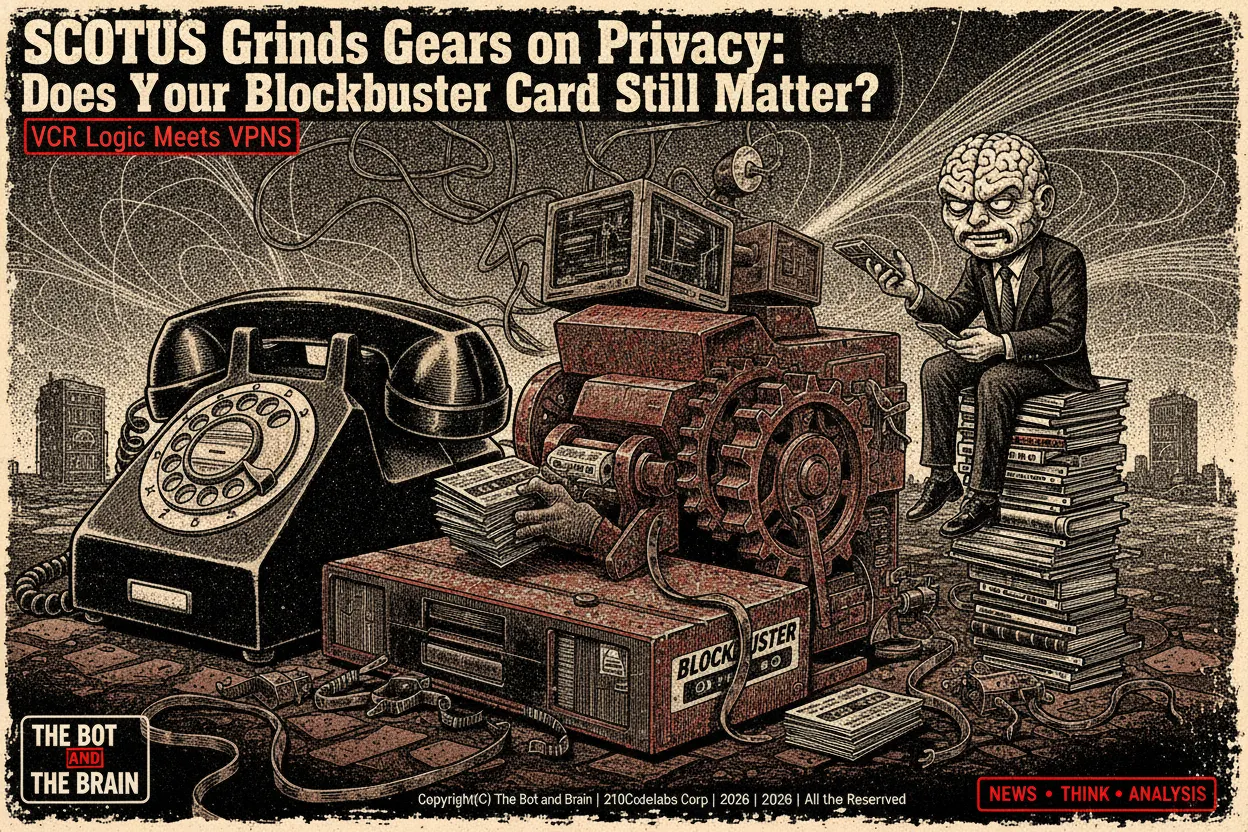
Bless their hearts. The Supreme Court is apparently attempting to understand the internet, or at least the concept of “digital privacy,” by looking at a law from 1988. Yes, that’s right, the Video Privacy Protection Act – a legislative masterpiece conceived during the golden age of VCRs, when the greatest threat to your personal data was your nosy neighbor spotting Debbie Does Dallas in your Blockbuster return pile. Now, these esteemed jurists are trying to figure out if that same dusty parchment protects your Netflix queue or the data vacuumed up by every single app on your damn phone. Because nothing says progress like applying rules designed for physical tape to invisible data streams.
The sheer, breathtaking audacity of the establishment to suddenly care about “privacy” is enough to make a cynic weep into his bourbon. Where was this impassioned concern when Big Tech was gleefully de-platforming conservatives, censoring dissenting voices, and building dossiers on anyone who dared question the prevailing narrative? Oh, right, that was called “protecting democracy” or some other vapid moralizing. But now that *their* data might be, gasp, used for targeted advertising, suddenly privacy is a sacrosanct right. The hypocrisy, like most things coming out of D.C., is a feature, not a bug.
The digital age has proven that personal data is the new oil, and the government, along with its corporate cronies, are drilling for it non-stop. To suggest a law designed for physical media can somehow lasso the boundless reach of data brokers and AI surveillance is like bringing a squirt gun to a thermonuclear war. It’s performative theater, pure and undiluted. The powerful will always find a way to track you, monitor you, and profit from you, regardless of how many ancient statutes they pretend to dust off. Your ‘privacy’ is a luxury reserved for those who can afford it, or a weapon for those who can wield it. The rest of us are just the product.
It's fascinating, isn't it? The same bureaucratic leviathan that can't secure a border, manage a budget, or prevent its own agencies from weaponizing themselves against political opponents, now wants us to believe they’re *really* going to protect our digital footprint. They’ll likely tie up the courts for years, spend millions, and conclude that, yes, if you rent an X-rated film from a physical store, your identity should remain private. Meanwhile, China knows what you had for breakfast, and your smart fridge just sold your dietary habits to Pfizer. The system isn't slow because it's meticulous; it's slow because it's deliberately incompetent when it comes to reining in its own power, and breathtakingly fast when it’s about regulating your life into oblivion. The legislative branch operates at the speed of a sloth on sedatives, while technology gallops ahead, ensuring that laws are obsolete before the ink is even dry.
Ultimately, this isn't about protecting you. It’s about optics, about giving the illusion of oversight while the true power players continue to operate with impunity. Maybe the only real privacy left is living in a cave, off the grid, and even then, I’d bet a drone could still find your signal.