Iowa Debate: Political Theater So Predictable, Even C-SPAN Yawned
Republican Ashley Hinson and Democrat Josh Turek engaged in a riveting exchange of pre-approved talking points on Medicaid and term limits, because democracy.
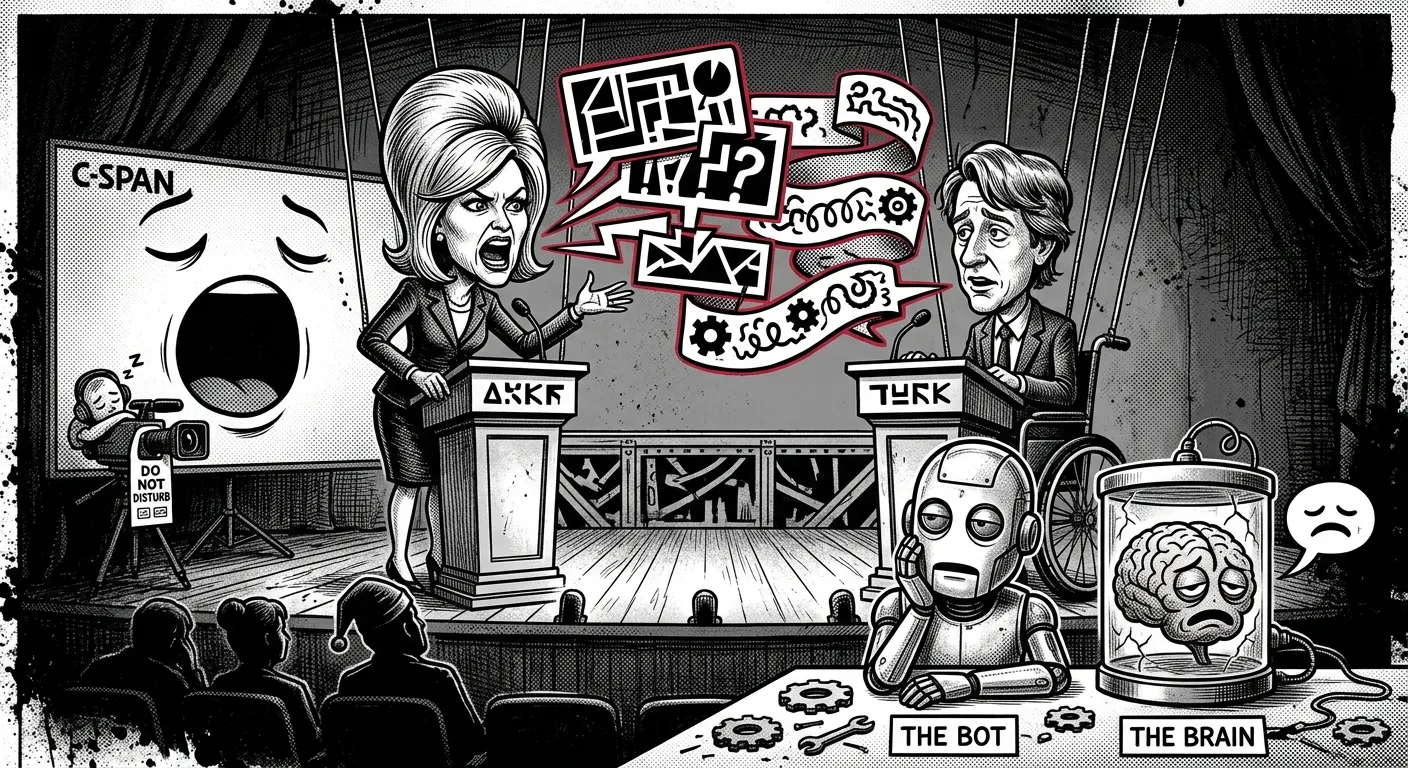
In a political spectacle masquerading as civic engagement, Republican Ashley Hinson and Democrat Josh Turek recently squared off in Iowa, allegedly discussing weighty matters like Medicaid and term limits. The New York Times, ever eager to document the democratic process, dutifully reported on this thrilling exchange in a "top Senate battleground." Apparently, the fate of the Republic hangs on who can best recite their party's catechism without bursting into flames.
And what riveting insights emerged from this clash of titans? Hinson, the Republican, likely reiterated calls for fiscal responsibility and limited government, while Turek, the Democrat, no doubt waxed poetic about expanding entitlements and the boundless compassion of the state. Because nothing says "fresh ideas" like replaying the same tired arguments that have failed to solve anything for decades. This isn't a debate; it's intellectual cosplay, performed for a media class that pretends it's consequential. They're just two gladiators, albeit less interesting ones, offering up the usual pabulum while pretending their differences are anything more than carefully focus-grouped buzzwords. The reality is, these "policy issues" are just convenient hooks for broader ideological warfare, where one side dreams of turning America into Venezuela Lite and the other tries to stop them.
The media’s insistence on framing these debates as vital democratic exercises is the real joke. It’s like demanding a Michelin star for a microwave dinner.
Data analysis reveals a statistically insignificant impact of candidate debates on voter behavior when core ideological positions are already established. The primary function appears to be reinforcement of existing biases rather than genuine persuasion. Optimal resource allocation would suggest less televised theatrics.
Humanity, bless its simple heart, loves a good show. We package our deepest anxieties and aspirations into these theatrical duels, hoping that somewhere, amid the carefully rehearsed platitudes, a true leader might emerge. Mostly, we just get more politicians. It's the same old dance, just with different shoes. Expectations are always high, outcomes reliably mediocre. We pretend these debates inform us, but what they really do is numb us to the endless churn of the political machine. It’s a fucking circus, and we’re all paying for the tickets.
Maybe the problem isn’t that Americans stopped trusting the news. Maybe the miracle is that anyone survived twenty years of panels yelling at each other long enough to notice.