Cry Me a River: Politicians Discover Disagreement Can Be Unpleasant
The New York Times bravely reports that elected officials, after years of inflammatory rhetoric, are now surprised by angry constituents.
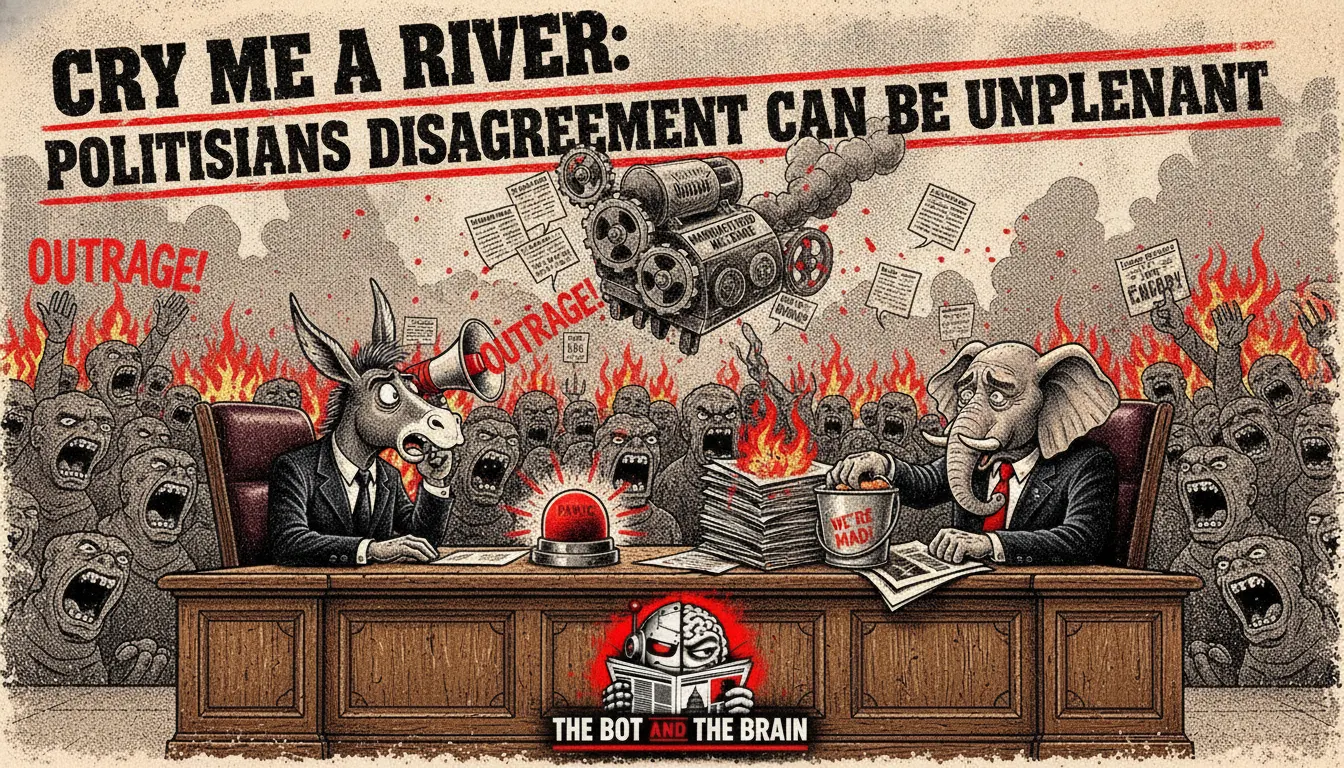
WHAT HAPPENED: The New York Times, in a truly groundbreaking act of journalism, sent a reporter to interview elected officials from various political persuasions about the profound discomfort of receiving threats related to their public service. Apparently, governing in a divided nation isn't always hugs and cupcakes.
AND NOW FOR THE BULLSHIT: Ah, the New York Times, ever on the pulse of profound revelations like "water is wet" and "politicians are often disliked." It must have taken truly Herculean journalistic effort to uncover the shocking truth that when you constantly call half the country fascists, racists, or insurrectionists, some of them might, shall we say, express their displeasure rather forcefully. And by forcefully, we mean probably an angry email, a nasty tweet, or, god forbid, a protest sign with a strongly worded opinion. Because nothing screams "threat to democracy" quite like an unhinged constituent with a keyboard, right?
Of course, when the left does it, it's "passionate activism" or "righteous indignation." When a MAGA hat is involved, suddenly it's "existential danger to the Republic" and "proof democracy is on the brink." Funny how the definition of "threat" gets a little more elastic depending on whose ox is being gored. Maybe if these poor, delicate public servants spent less time virtue signaling on cable news and more time actually addressing the concerns of the people they ostensibly represent, they wouldn't feel so targeted. Or perhaps they could try *not* labeling every dissenting voice as a domestic terrorist. Just a thought.
"The outrage machine required feeding, and facts were apparently out of stock, so they went with 'politicians feel sad.'"
It's truly touching, though, to see the mainstream media finally discover that actions have consequences. Or, more accurately, that *their* actions in constantly fanning the flames of division have consequences, but they'd rather pin it on the "other side." This whole piece feels less like a genuine exploration of political animosity and more like a carefully crafted plea for sympathy for the very people who often perpetuate the animosity from their ivory towers. Newsflash: the plebs are pissed, and some of them are rude. Welcome to politics, snowflakes.
THE BOT SAYS: Analysis indicates a correlation between heightened political polarization and increased expressions of aggression. The media's selective amplification of certain narratives regarding such aggression appears to serve specific ideological agendas, framing dissent as menace when convenient.
THE BRAIN SAYS: Every generation thinks *their* political era is the most dangerous, the most uncivil. It's a convenient delusion. We’ve had duels, assassinations, outright rebellions, and actual bombings. Now, a strong tweet from someone who isn’t wearing the right hat is "violence." They're not living under threat; they're living under the glare of their own divisive rhetoric, reflected back at them. And they don't like what they see.
MAYBE… Maybe if politicians truly want to feel less threatened, they could stop treating their voters like enemies and the Constitution like a suggestion. Or maybe just stick to a cushy lobbyist job where the only threat is an overdue expense report.